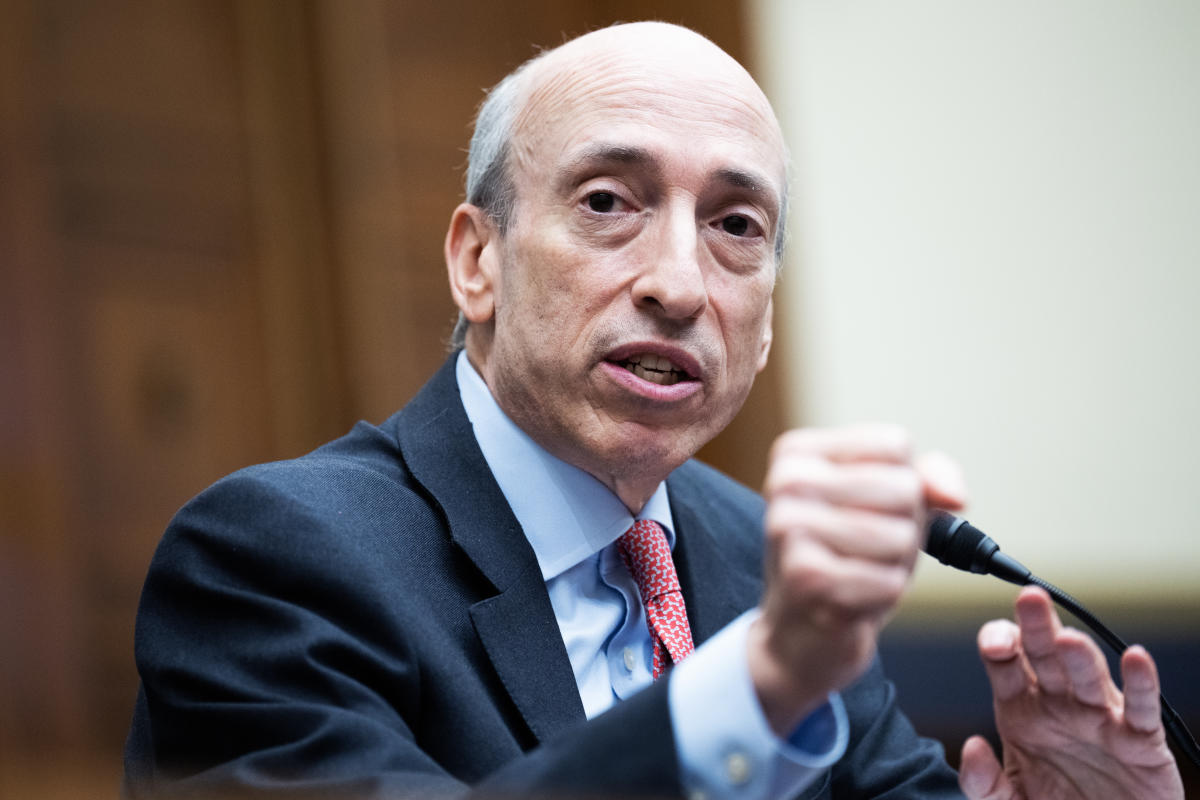

The U.S. Securities and Exchange Commission (SEC) issued a voluntary stay on its controversial climate rules on April 4, just weeks after companies and organizations filed lawsuits questioning the rules’ legal validity.
The legal complaints the SEC has incurred regarding the rules run the gamut, with some petitioners claiming the SEC has overstepped its duties. Others have advocated that the commission’s rules would not do enough to inform investors. The latter argument came as a result of the SEC dropping Scope 3 emission disclosures from the final version of the rules it approved on March 6.
More from Sourcing Journal
Even the U.S. Chamber of Commerce has gotten in on the litigation, criticizing the agency and proposing that it put forth new rules.
“The SEC has seriously eroded the reasonable investor standard of materiality. Further, the agency is attempting to micromanage how companies make key determinations about materiality. These changes will only create more confusion and undermine investor confidence in our public company system,” the Chamber of Commerce said in a statement upon filing its lawsuit.
The stay order put forth by the SEC makes it clear that the agency does not intend to abandon its work on the climate rules.
“In issuing a stay, the commission is not departing from its view that the final rules are consistent with applicable law and within the commission’s long-standing authority to require the disclosure of information important to investors in making investment and voting decisions,” the order reads. “Thus, the commission will continue vigorously defending the final rules’ validity in court and looks forward to expeditious resolution of the litigation.”
The stay means that the rules will not go into effect at least until “the completion of judicial review of the consolidated Eighth Circuit petitions,” per the letter signed by Vanessa Countryman, secretary of the SEC.
But Jacob Hupart, ESG co-chair at Mintz law firm, said that doesn’t mean companies are freed from reporting responsibilities.
“The SEC put a marker on the table for what it believes appropriate climate disclosures are, but this isn’t the only disclosure regime that companies are subject to,” he said. “If you have a multinational or international company, there are climate disclosure regulations from the EU, from the UK, from Switzerland. Even if you’re a domestic company, California has its own system of climate disclosures.”
And both Hupart and Michael Littenberg, partner at Ropes & Gray, said that many companies may face investor expectations that supersede actual requirements before the court releases a decision on the SEC’s final rules.
Investor demands may not be immediate, Littenberg said, but they still could press companies in the future.
“I think over time, we will see some investors pushing harder for the information that they want because some of the investors do want Scope 3 information. [Even though] that’s not part of these rules, and potentially other compliance requirements…investors may very well wind up asking for those disclosures or other disclosures that they want as well,” Littenberg said.
“I don’t think investors are going to feel constrained by the SEC Rule, but with the delay in the rule or even potentially the rule getting overturned, I think we are going to see some institutional investors being more proactive in their requests for climate related disclosures,” he added.
Importantly, the stay from the SEC includes a stipulation that ensures prior work is not erased.
“The stay issued by this order is limited to the final rules that have been challenged in the consolidated Eighth Circuit petitions. It does not stay any other commission rules or guidance,” it reads.
That note primarily alludes to the SEC’s climate guidance from 2010, which requires companies to disclose material climate-related matters. Hupart said that means companies won’t be able to regress, even as the new disclosure requirements remain pending.
“This stay only applies to the rules the SEC issued in 2024. The SEC had previously issued guidance on climate issues back in 2010, and that is expressly excluded from the stay,” Hupart told Sourcing Journal. “So, to the extent a company determined that it needed to report something to the SEC based on the 2010 climate guidance, that obligation remains in effect.”
Primarily, the stay helps to streamline the early pieces of the pending litigation. Several of the petitioners had filed motions to stay the final rules in the Eighth Circuit, where the consolidated arguments will be heard.
That was because, on the day after the Eighth Circuit had been selected to hear the case, the Fifth Circuit, which issued an initial administrative stay in response to a petition from Liberty Energy, dissolved its stay.
Instead of waiting for the new court to issue a second stay, the SEC took the action itself.
“All of the various motions for stay would act to delay the consideration of the merits, because there would be side issues in terms of the extent [and] the scope of the delay of the SEC reporting rule, and all of that back and forth could have consumed time, resources and ultimately delayed a resolution on the merits,” Hupart said. “Now all the back and forth about preliminaries is no longer of issue.”
The SEC noted the importance of focusing on the merits of the rules in its order to stay and also put a lid on a question some companies may have wanted answers to: What happens if the rules go into effect while their legality is pending?
“A stay avoids potential regulatory uncertainty if registrants were to become subject to the final rules’ requirements during the pendency of the challenges to their validity,” the order noted.
Littenberg said he believes the SEC should delay the enforcement of the rules, whether or not they need to be altered based on the court’s decision.
“It’s my hope and expectation that the SEC will push the timetable out. I don’t think it’s reasonable to expect that companies are going to do meaningful work toward compliance with the rule while there’s a stay in place, and I hope that the SEC recognizes that,” he said.
Nonetheless, affected companies will need to remain agile as the litigation proceeds to make well-informed decisions on what to track for potential future reporting, he added.
“I don’t think companies will have the luxury of not following the proceedings. They will have to make decisions at different points as to whether or not they start to address compliance with rules in earnest,” Littenberg said. “As we move through the litigation, as we get past the election, I think companies will have more of an informed view than they’ll have at this point, but I don’t think that this is one where companies can just forget about it until the final decision comes down.”

